Thursday, November 8, 2012


Tuesday, May 10, 2011
A new etwinning label

Saturday, September 11, 2010
Between the Lines graduates!
 |
 |
| Create your own ecard |
Tuesday, February 2, 2010
Romanian corner in a Greek school

We were pleased to recall our collaboration with the Targoviste Reading Group today. Anastasia come from London to the library to interview us for her PhD on Web2 tools. All the team gathered and evaluated their work a year after it finished. We really enjoyed the common spirit and the new things we learnt. We are especially proud for the media recognition by a Greek newspaper and a TV channel. Most of all, we hold fond memories of our friendship with the Romanian girls and their teacher, ms Carmen Radulescu. May we all meet in person one day!
Sunday, January 10, 2010

Wednesday, June 3, 2009
BOOK CHARADES
Saying goodbye today was made easier by playing the Library Angel. He whispered the answers to the student's questions through the wisdom of the books. Indeed, Aris opened "On the road" by Jack Kerouak only to read an excerpt containing "Catalina", which, spelt "Katalina" one of our twinner's name!
Since only one team had sound, we then decided to play charades. That really was fun, especially after an exam day, which accounts for the poor turn-up of the Greek team. But the boys did well, and the teams were once again in harmony. The Library wishes them both all the best in their lives and studies. It was an unforgettable partnership!
Tuesday, May 12, 2009
WAITING FOR Mr MENIS KOUMANDAREAS
 In a few hours we are meeting a famous author in the Greek Libary, the multi-prized mr Menis Koumandareas. As we did our "homework" for his visit, we came across a story within a story, about a Romanian youth. Constantinos translated the excerpt in eglish with the help of his friend Panos:
 “How do you like the kid?” I asked Manolis.
“There is something about him” he confessed, “something that one can’t find in kids of his age, especially Greek kids. Somehow, great capital as Bucharest once was in the turn of the century, it might have had some effect on him, his character, his manners, and hopefully his soul…”
In his turn, he seemed charmed by the youth. “One thing made an impression on me” he told me a bit later . “I don’t know if you noticed it too; His eyes turn to green now and then, like a swamp, like the depths of a lagoon, where the remnants lie in stillness.” From the book Η μυρουδιά τους με κάνει και κλαίω (Their scent brings tears to my eyes)
“There is something about him” he confessed, “something that one can’t find in kids of his age, especially Greek kids. Somehow, great capital as Bucharest once was in the turn of the century, it might have had some effect on him, his character, his manners, and hopefully his soul…”
In his turn, he seemed charmed by the youth. “One thing made an impression on me” he told me a bit later . “I don’t know if you noticed it too; His eyes turn to green now and then, like a swamp, like the depths of a lagoon, where the remnants lie in stillness.” From the book Η μυρουδιά τους με κάνει και κλαίω (Their scent brings tears to my eyes)
Friday, April 3, 2009
International Children's Literature Day
Members of the Greek Bookclub are interested in following Pedagogical Studies. Teachers of tomorrow are preparing by turning a famous Oscar Wilde fairy tale into a multimedia story to be told to remote primary schools in Greece via skype. Our first attempt is with Dimitritsi Primary School at Serres, an etwinning runner-up in this years prizes. We'll keep you posted!
Sunday, March 1, 2009
March talisman
 “I will stay with you one night longer,” said the Swallow, “but I cannot pluck out your eye. You would be quite blind then.”
“Swallow, Swallow, little Swallow,” said the Prince, “do as I command you.”
So he plucked out the Prince’s other eye, and darted down with it. He swooped past the match-girl, and slipped the jewel into the palm of her hand. “What a lovely bit of glass,” cried the little girl; and she ran home, laughing.
Then the Swallow came back to the Prince. “You are blind now,” he said, “so I will stay with you always.”
“No, little Swallow,” said the poor Prince, “you must go away to Egypt.”
“I will stay with you always,” said the Swallow, and he slept at the Prince’s feet.
The Happy Prince by Oscar Wild
 e
eWe receive a March talisman from Romania along with a kind invitation for a visit.
In Greece we also twist a red and a white piece of string and make a bracelet-talisman for children to wear until the first sparrow appears. A sweet way to welcome spring...
Από τη Ρουμανία μας ήρθε ένας "Μάρτης" μαζί με μια ευγενική πρόσκληση στην Ταργκοβίστε. Τα κοινά μας έθιμα μας παρέπεμψαν πάλι στο τρυφερό παραμύθι που μας απασχόλησε πριν από καιρό, τον Ευτυχισμένο Πρίγκιπα του Όσκαρ Ουάιλντ, όπου το χελιδονάκι γίνεται ο βοηθός του πρίγκιπα-αγάλματος για να απαλύνει τον ανθρώπινο πόνο, και τελικά, χάνει την ευκαιρία να αποδημήσει στην Αίγυπτο και πεθαίνει στα πόδια του φίλου του.
Why does the swallow have a forked tail?
Legend has it that during Constantinople’s siege in 1453 (not far from Dracula’s era), a swallow flew from the city to seek help, but was attacked by the Turks who cut his tail in two, and wounded him in the neck, which explains the red colour around his beak. From our library book “Birds that live near us” by biologist Costas Vassilakis, Livanis pbl, Athens, 2002, ISBN 960-14-0534-8
Γιατί το χελιδόνι έχει διχαλωτή ουρά;
Γιατί σύμφωνα με το θρύλο που διαβάσαμε στο βιβλίο του Κώστα Βασιλάκη "Τα πουλιά που ζουν πλάι μας", Λιβάνης, Αθήνα 2002, ISBN 960-0534-8, το σπάθισε Οθωμανός ενώ έβγαινε από την Πόλη να ζητήσει βοήθεια, το 1453. Έτσι εξηγείται και το κόκκινο χρώμα γύρω από το ράμφος του.
Friday, February 27, 2009
Carnival means dressing up and making merry!

“I was not alone. The room was the same, unchanged in any way since I came into it. I could see along the floor, in the brilliant moonlight, my own footsteps marked where I had disturbed the long accumulation of dust. In the moonlight opposite me were three young women, ladies by their dress and manner. I thought at the time that I must be dreaming when I saw them, they threw no shadow on the floor. They came close to me, and looked at me for some time, and then whispered together.” Dracula, chapter 5
It’s the last Carnival week in Greece and kids at school dress up and have fun before the 40-day lent period that is a preparation for Easter.
Many customs go back to the ancient greek and roman era, but their survival and mutation enforcens social bonds within villages and towns.
A bookclub member is the perfect Dracula’s bride(s) (a modern version!) and revokes one of the most discussed excerpts in the book. The one we discussed last year in our etwinning forum, Johnathan’s seduction by Dracula’s bride who wanted to drink his blood. Here is the “beastly” side of human sexuality, the one that Plato in Phaedros compares to a lewd and ugly horse, that needs to be tamed by reason.
Στο τελευταίο διήμερο του Καρναβαλιού, οι μαθητές μας έρχονται ντυμένοι για να δώσουν μια γιορταστική νότα στο σχολείο. Μέλος της Λέσχης ήταν η ιδανική νύφη του Δράκουλα (εις τριπλούν), θυμίζοντας τις περσινές μας συζητήσεις πάνω στο γνωστό απόσπασμα της αποπλάνησης του Τζόναθαν (οικειοθελώς;) από το βαμπίρ που ήθελε να του πιει το αίμα. Η ανθρώπινη σεξουαλικότητα εκφράζεται στο βικτωριανό μυθιστόρημα ως κάτι σαγηνευτικό και τερατώδες, θυμίζοντάς μας το αγροίκο άλογο του Πλάτωνα στον Φαίδρο, που συμβολίζει τα ένστικτα που χρειάζονται χαλιναγώγηση από τη Λογική.
It’s the last Carnival week in Greece and kids at school dress up and have fun before the 40-day lent period that is a preparation for Easter.
Many customs go back to the ancient greek and roman era, but their survival and mutation enforcens social bonds within villages and towns.
A bookclub member is the perfect Dracula’s bride(s) (a modern version!) and revokes one of the most discussed excerpts in the book. The one we discussed last year in our etwinning forum, Johnathan’s seduction by Dracula’s bride who wanted to drink his blood. Here is the “beastly” side of human sexuality, the one that Plato in Phaedros compares to a lewd and ugly horse, that needs to be tamed by reason.
Στο τελευταίο διήμερο του Καρναβαλιού, οι μαθητές μας έρχονται ντυμένοι για να δώσουν μια γιορταστική νότα στο σχολείο. Μέλος της Λέσχης ήταν η ιδανική νύφη του Δράκουλα (εις τριπλούν), θυμίζοντας τις περσινές μας συζητήσεις πάνω στο γνωστό απόσπασμα της αποπλάνησης του Τζόναθαν (οικειοθελώς;) από το βαμπίρ που ήθελε να του πιει το αίμα. Η ανθρώπινη σεξουαλικότητα εκφράζεται στο βικτωριανό μυθιστόρημα ως κάτι σαγηνευτικό και τερατώδες, θυμίζοντάς μας το αγροίκο άλογο του Πλάτωνα στον Φαίδρο, που συμβολίζει τα ένστικτα που χρειάζονται χαλιναγώγηση από τη Λογική.
Saturday, February 14, 2009
Timing in love

On Valentine's day the teachers were sitting at the kiosque of the project in Prague. But since the Greek bookclub on the 22 of March wanted to share the books they read with another bookclub at the Geniko Lyceio Melission joining the topics of love and time together, we post it on this day.
Maria Vergou and Maria Gerandreou delved in the topic of love in Dracula and Dorian Grey. Press here for their work in Greek.
Kyriaki Regou gathered the photos for the poster.
The discussion was very interesting and we promised to have a second round soon.
Η Αναγνωστική ομάδα της Ελευσίνας συζήτησε στις 22 Μαρτίου με την αντίστοιχη του ΓΕ.Λ. Μελισσίων στη Σχολική του Βιβλιοθήκη. Οι ομάδες ένωσαν τα θέματά τους Χρόνος και Έρωτας, για να συζητήσουν το Χρονισμό στον Έρωτα. Αν και στις 14 Φεβρουαρίου οι δασκάλες είμασταν στην Πράγα, στο περίπτερό μας, η δημοσίευση γίνεται εδώ λόγω του θέματος. Πατήστε εδώ για την εργασία της Μαρίας Βέργου και Μαρίας Γερανδρέου. Τις εικόνες της αφίσας βρήκε η Κυριακή Ρέγκου. Η συζήτηση άνοιξε την όρεξη για δεύτερη συνάντηση των δύο σχολείων σύντομα!
Friday, February 6, 2009
Can a book do harm?
 “His eye fell on the yellow book that Lord Henry had sent him.[...] After a few minutes he became absorbed. It was the strangest book that he had ever read. [...] Things that he had dimly dreamed of were suddenly made real to him. Things of which he had never dreamed were gradually revealed. [...] There were in it metaphors as monstrous as orchids and as subtle in colour. The life of the senses was described in the terms of mystical philosophy. One hardly knew at times whether one was reading the spiritual ecstasies of some mediaeval saint or the morbid confessions of a modern sinner. It was a poisonous book.” The Picture of Dorian Grey, chapter 10
We started discussing it in one of our chats, remember? Will the bookclub members please comment on this question, so we can have a bookish roundup of our project?
«Το μάτι του έπεσε στο κίτρινο βιβλίο που του είχε χαρίσει ο λόρδος Χένρι. […] Μέσα σε λίγα λεπτά είχε προσηλωθεί. Ήταν το πιο παράξενο βιβλίο που είχε διαβάσει. […] Ό,τι είχε φανταστεί σα σε όνειρο τώρα έπαιρνε σάρκα και οστά. Κι ακόμα ό, τι δεν είχε φανταστεί τώρα του αποκαλύπτονταν σταδιακά.[…] Συνάντησε μεταφορές άγριες σαν ορχιδέες με λεπτότατες αποχρώσεις. Οι αισθήσεις περιγράφονταν με όρους μυστικιστικούς. Δεν ξεχώριζε κανείς μερικές φορές αν διάβαζε την πνευματική έκσταση κάποιου αγίου του μεσαίωνα ή την αρρωστημένη εξομολόγηση ενός μοντέρνου αμαρτωλού. Ήταν ένα δηλητηριώδες βιβλίο.» Το πορτραίτο του Ντόριαν Γκρέυ, κεφ. 10
Θυμόσαστε τη συζήτησή μας στο chat για το αν το βιβλίο έβλαψε τον Ντόριαν ή ήταν φύσει επιρρεπής στη διαφθορά; Καλούνται τα μέλη μας να εκφράσουν τη γνώμη τους στα σχόλια για το αν και πότε ένα βιβλίο είναι επικίνδυνο για τον αναγνώστη του, ώστε να δώσουμε βιβλιοφιλικό τέλος στο πρόγραμμά μας!
Thursday, February 5, 2009
1-YEAR anniversary
A year back it all started. A year after we are richer in ITC knowledge, glad to have made friends, and looking forward to meeting in person!
Always a celebration is an opportunity to review the past and appreciate it through the value of the things you realized, as good or bad.
You're a winner for a lifetime
If you seize that one moment in time
Make it shine”
Whitney Huston-One Moment in time
If you seize that one moment in time
Make it shine”
Wednesday, January 28, 2009
Waiting for the prize....
13th of February....For us, 13 it will be our lucky number. It was very exciting to find out our project's name between the finalists nominated to the European award within eTwinning competition...
Now, we are waiting for the special day...See you in Prague!!
You can see below an interview with the headmaster of Economic High School, Mrs. Suzana Ilie, and some evaluation feedback from Romanian Team.
Πατήστε κάτω για να δείτε τη συνέντευξη της Διευθύντριας του «ION GHICA” κας Suzana Ilie, και την εργασία πάνω στο ΧΡΟΝΟ των μαθητών στην Ελευσίνα, καθώς περιμένουν την απονομή των βραβείων.
Click here for some media announcement.
So let the Elefsina Tower Clock do the countdown till zero hour!
Our team ponders on time, while waiting for the prize...
Now, we are waiting for the special day...See you in Prague!!
You can see below an interview with the headmaster of Economic High School, Mrs. Suzana Ilie, and some evaluation feedback from Romanian Team.
Πατήστε κάτω για να δείτε τη συνέντευξη της Διευθύντριας του «ION GHICA” κας Suzana Ilie, και την εργασία πάνω στο ΧΡΟΝΟ των μαθητών στην Ελευσίνα, καθώς περιμένουν την απονομή των βραβείων.
Click here for some media announcement.
So let the Elefsina Tower Clock do the countdown till zero hour!
Our team ponders on time, while waiting for the prize...
Tuesday, January 27, 2009
Short bracket about Time…
We understand Time starting by the feeling that our inner life (Thoughts, feelings) is always changing. Every change is made in time and every phenomenon has limits in time.
The philosophers had understood time as an interval between two different events, or medium, substance, in which events were happened.
There are also some definitions concerning our way to relate to time: subjective time or objective time.
There were also some opinion which denied that time exist. Saint Augustine said that time has only one dimension: the present – and we all know his opinion had influenced the youth of the 80es – as well as the epicurean scholars – Carpe diem – is a well known quote. Why? Because the past has already gone, we just got a present memory of the past events; the future is only a present waiting for the events will happen.
Newton has understood time as an essence independent from the things; Leibniz on the other hand has understood time as a relationship between things. Only in that way we can perceive the time, only in this way time has reality.
Debate is still continue in the modern age with Kant who understand time as a inner objectivity, some kind of medium, intuition. He said time and space are the category of our sensibility. Without these categories, we cannot live and understand the world as an existence.
Κάνοντας μια συνεισφορά στην τηλεδιάσκεψη Ελευσίνας – Γιαννιτσών με θέμα το χρόνο, η κα Ραντουλέσκου μας έστειλε μια σύνοψη των θεωριών περί χρόνου, από τον Ιερό Αυγουστίνο που είδε το χρόνο σαν ένα συνεχές παρόν, μέχρι τον Νεύτωνα, τον Λάιμπνιτς και τον Καντ, που όρισαν ο καθένας με άλλο τρόπο το χρόνο, σαν υποκειμενικό βίωμα ή σαν αντικειμενική αλήθεια.

There are some opinions talking about time as a cultural meaningful. In Romania, Lucian Blaga and Mircea Vulcanescu have written about the Romanian feeling of existence, which is related to time. There is, following them, a national, cultural, meaning of time. We, as Balkans we got different social behavior, only because we understand time in another way. We are living into a continuum present….that why we are always late.
Click o n the clock to read a discussion summary in the Greek Library on the theme of Time in our novels with Maria Vergou and Maria Gerandreou.
Πατήστε στο ρολόι για να διαβάσετε την περίληψη της συζήτησής μας για το θέμα του Χρόνου στα δυο γοτθικά μυθιστορήματα που διαβάσαμε.
The philosophers had understood time as an interval between two different events, or medium, substance, in which events were happened.
There are also some definitions concerning our way to relate to time: subjective time or objective time.
There were also some opinion which denied that time exist. Saint Augustine said that time has only one dimension: the present – and we all know his opinion had influenced the youth of the 80es – as well as the epicurean scholars – Carpe diem – is a well known quote. Why? Because the past has already gone, we just got a present memory of the past events; the future is only a present waiting for the events will happen.
Newton has understood time as an essence independent from the things; Leibniz on the other hand has understood time as a relationship between things. Only in that way we can perceive the time, only in this way time has reality.
Debate is still continue in the modern age with Kant who understand time as a inner objectivity, some kind of medium, intuition. He said time and space are the category of our sensibility. Without these categories, we cannot live and understand the world as an existence.
Κάνοντας μια συνεισφορά στην τηλεδιάσκεψη Ελευσίνας – Γιαννιτσών με θέμα το χρόνο, η κα Ραντουλέσκου μας έστειλε μια σύνοψη των θεωριών περί χρόνου, από τον Ιερό Αυγουστίνο που είδε το χρόνο σαν ένα συνεχές παρόν, μέχρι τον Νεύτωνα, τον Λάιμπνιτς και τον Καντ, που όρισαν ο καθένας με άλλο τρόπο το χρόνο, σαν υποκειμενικό βίωμα ή σαν αντικειμενική αλήθεια.

There are some opinions talking about time as a cultural meaningful. In Romania, Lucian Blaga and Mircea Vulcanescu have written about the Romanian feeling of existence, which is related to time. There is, following them, a national, cultural, meaning of time. We, as Balkans we got different social behavior, only because we understand time in another way. We are living into a continuum present….that why we are always late.
Click o
n the clock to read a discussion summary in the Greek Library on the theme of Time in our novels with Maria Vergou and Maria Gerandreou.Πατήστε στο ρολόι για να διαβάσετε την περίληψη της συζήτησής μας για το θέμα του Χρόνου στα δυο γοτθικά μυθιστορήματα που διαβάσαμε.
Wednesday, January 21, 2009
TODAY'S CHAT (great themes in a nutshell)

"How old is Dorian Grey's portrait?"
Now there is an intriguing question from the Romanians! Some of the answers were, 17, 90, 36, but when we thought about it better, we agreed that the portrait is ageless, just as good and evil in human nature. Whether man is born good, was a philosophical debate and most of the Greek team gave a Socrates-like answer "Ουδείς εκών κακός", "Nobody is evil by nature", while the Romanian team went for an Aristotelian anwer saying that good and evil is found in different degrees within us all, and is a matter of influence and circumstances which dominates. Speaking about influences, personal responsibilities and choices, based on the book, we were under the impression today that the chat merely touched the themes and opened questions, rather than came to a definite answer. That's philosophy for you! We had to hurry to our math term exams and biology lessons and had an etwinning chat break, which whetted our appetites for the next one on Phaedros.
Library moments before the chat
 "So, you want to toy with the projector?" Then listen to Plato's allegory of the cave, and make your own shadow of the prisoner who thought that what he saw was reality.
Fresh news from the Greek Library. We are preparing for our chat on Dorian Grey, anticipating Phaedros from Plato, and library members came to make hand-shadows (typical!). But mischief was soon turned to story-telling and philosophy-within-a-school-break. Panos and Yiannis joined hands to make the "troglodytis" (a little like Quasimodo, don't you think?) and we can use it as a starter for Plato's theory of Forms.
The "appearance and reality" theme haunts all classical literature. Where is it found in Dorian Grey? See you soon!!
Πριν το τσατ, ήρθαν στη Βιβλιοθήκη τα πιστά μέλη και έκαναν σκιές στο βιντεοπροβολέα που είχε στηθεί για την τηλεδιάσκεψη. Ευκαιρίας δοθείσης, άκουσαν το μύθο του σπηλαίου του Πλάτωνα, και η μικρή αταξία μετατράπηκε σε πεντάλεπτο μάθημα φιλοσοφίας. Αργότερα... συζητήσαμε για το ποια είναι η πραγματική ηλικία του πορτραίτου του Ντόριαν Γκρέυ, που ήταν μια ενδιαφέρουσα ερώτηση των Ρουμάνων. Η απάντηση που προτιμήθηκε είναι ότι είναι άχρονο, όπως η αρετή και η κακία στην ανθρώπινη φύση. Στη συνέχεια επιχειρήθηκε να απαντηθεί η κλασική διαμάχη αν ο άνθρωπος γεννιέται κακός ή γίνεται. Η ελληνική ομάδα ήταν σωκρατική στην απάντησή της "Ουδείς εκών κακός" ενώ η ρουμανική έκλινε προς τον Αριστοτέλη, υποστηρίζοντας ότι καλό και κακό συνυπάρχουν στον άνθρωπο και εκδηλώνονται ανάλογα με τις συνθήκες. Αντί για απαντήσεις τρέξαμε πίσω στα μαθήματά μας με περισσότερα ερωτήματα περί αρετής. Άξιζε πάντως αυτό το ζωντανό φιλοσοφικό μας διάλειμμα!
Sunday, January 18, 2009
Our own Dorian Grey-The Marathon youth
 The Youth of Marathon, a copy of the 4th century b.C. statue we had in the library (the original travelled to Bejing for the Olympics, this year!), seemed different after reading Dorian Grey. Maria Gerandreou and Maria Vergou, created the library version of Dorian, looking at himself in the mirror in his library (a slight adaptation of ours!), just before he shuttered it at the end of the book. The shuttered mirrors motif appears in Dracula, too, remember? We hope the image unites our two gothic novels with Phaedros, and the theme of art, love and ...books, which Socrates seemed to disapprove of.
Ο έφηβος του Μαραθώνα, αντίγραφο του κλασικού αγάλματος του 4ου π.Χ. αιώνα, (τον στείλαμε και στο Πεκίνο για τους Ολυμπιακούς) είναι ο δικός μας Ντόριαν Γκρέυ, με την αιώνια νεότητά του, που κοιτάζει για τελευταία φορά τον καθρέφτη, πριν τον θρυμματίσει, σαν προείκασμα του δικού του τέλους. Θυμηθήκαμε ανάλογη σκηνή στο Δράκουλα, τον απέθαντο, που όμως δεν είχε είδωλο. Ελπίζουμε η σύνθεση και φωτογραφία της Μαρίας Βέργου και Μαρίας Γερανδρέου να ενώνει τα δυο γοτθικά μυθιστορήματα με τον επικείμενο Φαίδρο, και τα θέματα της τέχνης, του κάλλους, του έρωτα και των βιβλίων, που δε συμπαθούσε ο Σωκράτης!
The connection between Phaidros - The portrait of Dorian Gray - Dracula

One of Plato’ dialogues, tradition added subtitle peri tou kalou - About beautiful. It is the dialogue that Plato named after the name of young companion Phaidros. But during the tradition, this dialogue has been further named: peri psyches - About soul; peri to erotic - About love. About all those listed, about beauty, about love and the soul - and not just passing - is here. But also, and very detailed about techne - about art, but also very closely, the speech - the speech and language, but also, and even chip in essential aletheia about - the truth, but also really pressed about mania - the crazy, loss of self, and finally, in the face constantly, and the idea of being, immortal soul.
The truth, The Good, The beauty- have been always the most important approaches to the writers and to philosophers.
To talk about in our Wednesday chat meeting, we are in mind the Myth of winged soul (part.246a - 249b) and the Myth of Theuth (274b - 275b)
The truth, The Good, The beauty- have been always the most important approaches to the writers and to philosophers.
To talk about in our Wednesday chat meeting, we are in mind the Myth of winged soul (part.246a - 249b) and the Myth of Theuth (274b - 275b)
Click here for the excerpt in Greek. Find the first myth with Edit, Find on this page, "Όσο λοιπόν για την αθανασία της". Ask the librarian where to find the myth of Theuth in Greek.
Click on the handmade and digital image to see the myth though the Greek Bookclub's eyes. Mouslum and Elton worked for the posters. Take a look at our discussion notes!
Πατήστε επάνω στις εικόνες για να δείτε τις αφίσες του Μουσλούμ και του Έλτον. Ρίξτε μια ματιά στις σημειώσεις που κρατήσαμε από τη συζήτηση στην ελληνική ομάδα.


Below, there is a debate map, you are invited to compete with your arguements related to the soul (mortal or immortal).
Friday, January 9, 2009
ETWINNING XMAS
 Father Xmas came from Romania yesterday bearing christmas gifts (schools in Greece always open on the 8th of January) and gave a festive aftertaste to the school library. Melodic Romanian choirs sang the carols, handmade Xmas cards and beautiful decorations and treats were exhibited. Our customs, as written by our twinners are very alike, just as they are in Easter. We thank you very much and wish you a Happy and Prosperous New Year!
Το εορταστικό αντίδωρο από τη Ρουμανία γέμισε τη βιβλιοθήκη με μελωδίες, διακοσμητικά και χειροποίητες κάρτες. Με ιδιαίτερη χαρά καταχωρήσαμε στο Ευρωπαϊκό Περίπτερο τα βιβλιαράκια μινιατούρες 3 εκατοστών (!) με το σύνταγμα της Ευρώπης στα Ρουμανικά. Ευχαριστούμε τους συνεργάτες μας και ευχόμαστε Καλή Χρονιά και πάντα προόδους!
In Targoviste the Father Christmas has also came and offered us precious gifts. We ate the sweets and shared between us the calendars for the new year (Hope we won't be late anymore) and the Art Posters, listeninng the Greek carols. It was marvelous.
Thursday, January 8, 2009
Dracula's influence. Part 4. Filmography
The most recent Vampire hit is Twilight, based on Stephenie Meyer's novel. Have you seen it? Please add your summary, links and comment. The Library suggests The Internet Movie Database (imdb), where you can read all about it!
Στα πλαίσια της επιρροής του μύθου του Δράκουλα, παρακολουθήσαμε και σχολιάσαμε την ταινία Λυκόφως, βασισμένης στο ομώνυμο βιβλίο της Στέφανι Μέγιερ. Ακόμα ένα ισχυρό σύμβολο της εφηβείας, της θυσίας, της φιλίας, της πίστης. Το μοιραστήκαμε με τους Ρουμάνους. Πατήστε εδώ για πρόσφατο άρθρο στον Αθηναϊκό τύπο!
Thursday, December 11, 2008
11th of December. Universal Day for Children's Rights
 "Climb up! little boy," said theTree, and it bent its branches down as low as it could; but the boy was too tiny. And the Giant's heart melted as he looked out. "How selfish I have been!" he said; "now I know why the Spring would not come here. I will put that poor little boy on the top of the tree, and then I will knock down the wall, and my garden shall be the children's playground for ever and ever." He was really very sorry for what he had done." The Selfish Giant, Oscar Wilde
Make the world a happy playground for all the children in the world.
Ο Εγωιστής Γίγαντας του Όσκαρ Ουάιλντ γκρεμίζει το τείχος του κήπου και της καρδιάς του με αφορμή ένα Παιδί (το μικρό Χριστό) κι εκείνος αποφασίζει να αφήσει τα παιδιά να παίζουν πάντα στον κήπο  του για να διατηρηθεί η άνοιξη.
 του για να διατηρηθεί η άνοιξη.
Ας κάνουμε αυτόν το κόσμο τον Κήπο των Παιδιών.
On the right you see a page from Hilda Boswell's Treasury of Children's Stories, (1971), which, as a child introduced me to Oscar Wilde.
Library comment
Wednesday, December 10, 2008
10th of December - Universal Day of Human Rights
 An important day to remember every single day... Only then can Oscar Wilde's quote be put into effect: “The aim of life is self-development. To realize one’s nature perfectly –that is what each of us is here for”. The Picture of Dorian Grey, chapter 2
And we did in the last time....As a proof that e-Twinning collaboration can establish friendship, is our project http://partilhandodiferencas.wordpress.com/ , which is a photoproject related to Universal Day of Human Rights. Students from three schools (Romania, Greece and Portugal) took Black and White pictures and made an expo in their school. To improve the impact of their action, students from Targoviste made also postal cards with these pictures and sold them. The money collected will become presents during the week before Christmas for the children from Boy's Centre in Targoviste. We are very thankful to our partener from Greece who made calendars and sent them to Targoviste to increase the results of our charity action. Not in the last time, we have to remember a target associated to our action which is...Telis, Geniko Lykeio's dog - he will receive some crispies to eat in Christmas day....
On the other hand, we realize a research concerning the relationship between art and life, in Wilde's opera and also in the opera of some Greek Philosophers. The results of our research you can access here:
1. A virtual dialogue about art
2. Wilde's quotes or....ancient wisdom
Library note following:
 Telis, the shcool guardian-dog, comes from Aristotelis (=Aristotle). Since we started our etwinning collaboration, our school has been renamed to Aristoteleio Geniko Lyceio Elefsinas, just like the ION GHICA Targoviste Economic Colegiul.
The calendars were made to twin Targoviste's work on Human Rights. Our first thought was to collect money for Telis (who broke his leg more than a month ago). After discussing it with him (and bribing him with a can of meat) we sent the calendars for the Boy's Centre in Targoviste. For his generosity, he was allowed to take a snooze in the school library (he prefered the art department!)
Από την έναρξη της συνεργασίας μας με τη Ρουμανία, το Λύκειό μας μετονομάστηκε σε «Αριστοτέλειο». Ο αδέσποτος σκυλάκος της φωτογραφίας έσπασε το πόδι του τον Οκτώβριο, υιοθετήθηκε από το σχολείο μας και ονομάστηκε «Τέλης». Τα ημερολόγια που φτιάξαμε για να ακολουθήσουμε τους συνεργάτες μας για την Παγκόσμια Ημέρα Δικαιωμάτων του Παιδιού θα εξασφάλιζαν τη σίτισή του. Αντ’ αυτού, στάλθηκαν για το φιλανθρωπικό σκοπό των Ρουμάνων, που σε αντάλλαγμα, θα έστελναν μπισκότα στον σκύλο μας. Πάντως, για την καλή του συμπεριφορά, η Τέλης, αποπαρασιτωμένος και εμβολιασμένος, επιτρέπεται να πάρει τον απογευματινό του υπνάκο στη Βιβλιοθήκη!
Tuesday, December 9, 2008
PAINFUL LOSSES
 Albert Oprea ( student ION GHICA Economic School, Targoviste, died of aneurism)
 Alexis Gregoropoulos (everybody's student, Athens Greece, shot at student demonstration)
Words are not enough. Our sincerest condolances to family and friends.
Τον μήνα αυτό είχαμε δύο οδυνηρές απώλειες. Ο Αλμπερτ Οπρέου του Οικονομικού Λυκείου ΙΩΝ ΓΚΙΚΑ, που έφυγε ξαφνικά από ανεύρυσμα και ο μαθητής ολονών, ο Αλέξης Γρηγορόπουλος, που πυροβολήθηκε σε διαδήλωση μας άφησαν πρόωρα. Βαθύτατα συλλυπητήρια στις οικογένειες και τους φίλους τους.
Saturday, December 6, 2008
DORIAN GREY'S COLLECTIONS.Chasing the shadows away
“he used to give curious concerts in which mad gipsies tore wild music from little zithers, [...], while grinning Negroes beat monotonously upon copper drums...” The Picture of Dorian Grey, chapter 11The aesthet Dorian creates his own little worlds of beauty to chase away the fear that rises from his terrible secret, guarded by his ageing and decaying portrait in the attic. Click here for this collection of exotic musical instruments, Anastasia’s work, and here for his precious gem collection, Socratis’ work. We also brought whatever perfume we had, and placed it near the book, so library visitors asked about it and were told the story.
Ο εστέτ Ντόριαν Γκρέυ, προσπαθεί να διώξει το φόβο που πηγάζει από το φοβερό του μυστικό, το οποίο είναι καλά κλειδωμένο στη σοφίτα, στο περίφημο πορτραίτο του που γερνάει και αποσυντίθεται, με το να συλλέγει μανιωδώς πετράδια, αρώματα, υφάσματα και εξωτικά μουσικά όργανα. Πατήστε εδώ για τα υπερκείμενα της Αναστασίας και του
Σωκράτη. Τα αρώματα και τα πετράδια που φιλοξενήθηκαν αυτή την εποχή στη βιβλιοθήκη ήταν μια πρώτης τάξεως βιβλιοπαρουσίαση!
Friday, November 28, 2008
Wilde - Kavafis. Reflecting pictures. Eminescu. Their poetical alter ego.

They both lived in the same era, were aesthets who worshipped Art, were doomed to a secret love life, and are deemed among the top authors and poets of their time. Oscar Wilde and Konstandinos Kavafis never met but "the similarities between Dorian Grey and Kavafis' poems are astounding" as Efi puts it. Read her work here.
"Είναι εκπληκτικές οι ομοιότητες ανάμεσά τους" παρατήρησε το μέλος της Αναγνωστικής Λέσχης που ανέλαβε τη σύγκριση χωρίων του Ντόριαν Γκρέυ και ποιημάτων του Καβάφη. Η Έφη το αποδίδει στη ν εποχή τους, την κρυφή τους ζωή, στον αισθητισμό τους. Διαβάστε εδώ.
 ν εποχή τους, την κρυφή τους ζωή, στον αισθητισμό τους. Διαβάστε εδώ.
 In the February 2009 issue of the enewspaper DIA TAUTA, we found an article on Romania's national poet Michail Eminescu, Wilde's and Kavafis contemporary man of literature. His verses are heroic and patriotic, he has a force and a social vision the other two poets wouldn't share.Read Costas' Papageorgiou translation of the article here. Catch a glimpse of Eminescu's wonderful world of poetry below, in the musical score of Hyperion.
Στο τεύχος του Φεβρουαρίου 2009 της τοπικής εφημερίδας ΔΙΑ ΤΑΥΤΑ, βρήκαμε άρθρο για τον σύγχρονο του Ουάιλντ και του Καβάφη, Μιχαήλ Εμινέσκου, ο οποίος κινείται περισσότερο στο κλίμα του Βαλαωρίτη και του Σολωμού, διαπνεόμενος από ηρωϊκό ιδεώδες και πατριωτισμό, οραματιζόμενος την κοινωνική δικαιοσύνη, γι' αυτό είναι και ο εθνικός ποιητής της Ρουμανίας.Δείγμα της ποιητικής του μαγείας η ενορχήστρωση του "Υπερίων" που ακολουθεί.
Saturday, November 22, 2008
November 20th webcam chat summary
 Oscar Wilde’s fairy tales are for children as well as adults, not only because adults have a right to recall their childhood, but also for the bittersweet melancholy they convey. In the Selfish Giant, the Rose and the Nightigale, the Happy Prince the “big” and the “small” are complementary, they need each other to form a duo. There is love that transends sexes evoking parentship (Selfish Giant), friendship (Happy Prince), unreciprocated love (Nightingale and Rose). Sacrifice for the loved one, that doesn’t even know you exist, is meant as the culmination of selflessness, and is catered through aesthetic criteria, in order to reach beauty, which according to the author is the goal of art. The heart motif is everpresent, melting, offering its blood to create a flower, breaking at the loss of a loved one. There is no apparent sign of didactisism, yet reading between the lines you can find Wilde’s critisism on society. In this light what isn’t appreciated in this world, obtains a place in Paradise, so all is not in vain...
Τα παραμύθια του Όσκαρ Ουάιλντ απευθύνονται τόσο στα παιδιά, όσο και του ενηλίκους, όχι μόνο γιατί οι τελευταίοι έχουν το δικαίωμα να ξαναγίνουν παιδιά, όσο και για τη γλυκόπικρη μελαγχολία που τα διαπερνά. Το «μεγάλο» και το «μικρό» αλληλοσυμπληρώνονται, ενώνονται για να αποτελέσουν ένα ζευγάρι. Η αγάπη με τη μεταφορά της καρδιάς που προσφέρει το αίμα της, που λιώνει ή που σπάει, υπερβαίνει τα φύλα ανακαλώντας τη στοργή του γονέα (Εγωϊστής Γίγαντας), τη φιλία (Ευτυχισμένος Πρίγκιπας), τον έρωτα χωρίς ανταπόκριση (Αηδόνι και Τριαντάφυλλο) φτάνοντας ως τη θυσία, που αποτελεί την υπέρβαση του εγώ. Τα μηνύματα διυλίζονται από τα αισθητικά κριτήρια του συγγραφέα για να πραγματώσουν το σκοπό της Τέχνης, που κατά τον Ουάιλντ είναι το Ωραίο. Ενώ δεν
 υπάρχει εμφανές ηθικό δίδαγμα, η κοινωνική κριτική του συγγραφέα είναι ορατή σε δεύτερο επίπεδο. Με αυτή την οπτική γωνία, ό,τι δεν εκτιμάται στην παρούσα ζωή, δικαιώνεται στην ουράνια, απαλύνοντας κάπως την ανθρώπινη αχαριστία ή άγνοια...
Both Bookclub members illustrate the Rose and the Nighingale with their silhouettes.
Οι σιλουέτες των Ρουμάνων μαθητριών και των Ελλήνων μαθητών εικονογραφούν Το αηδόνι και το Τριαντάφυλλο.
Thursday, November 20, 2008
20th November a special chat in Philosophy Day

UNESCO has established, since 2002, as the third Thursday in November to celebrate PHILOSOPHY- The best school of thought and freedom of human!
That's why the pleasure to chat with our twins was increase, especially because it was a special day, Philosophy Day. Celebrated since 21 November 2002, as the intellectual and ethical arm of the United Nations, function without promoting philosophical reflection as the basis for democracy, human rights and a right society.
Philosophy, as the term signifies, is the love of wisdom. Regardless of its specific termi nology in various cultures all over the world, tetsugaku in Japanese, indicating the discipline of wisdom, or in Arabic, falsafa, meaning science of wisdom, this act of thinking about thinking turns by definition around the fundamental concepts and ideas that lie at the heart of existence, both individual and collective. It is this act of philosophizing that is the lifeblood of philosophy. And it is precisely this act of reflection, of analysis, of questioning – whether of concepts that are taken for granted, ideas dulled by time, or long-established paradigms.
Sidarta - Another Happy Prince


During one of his few excursions from the protection of his father's palace, Sidhartha saw three things which opened the harsh realities of life to him. He saw an old man, suffering from the frailties of age. He saw a sick man, suffering from disease. He also saw a dead man, which shocked him greatly. He finally realized that the infirmities of old age, and the pain of sickness and death caused suffering that he had never experienced. This revelation caused him to begin a search for truth that drastically changed his life, and, eventually, the lives of millions.
In a way, Budda is a...happy prince. The difference lies on timing. Oscar Wilde's character only saw human pain in his "second life" as a statue
...There many things should be cover...at least with our eyelids. But it is not too late to act. Even if one cannot move, some feathered friend is there to help.
Το παραμύθι του Ευτυχισμένου Πρίγκιπα μας έφερε στο νου έναν άλλο πρίγκιπα, αληθινό, που, κλεισμένος στο παλάτι του, δεν είχε ιδέα από τη δυστυχία του λαού του. Όταν μια μέρα βγήκε, και είδε τα γηρατειά, την ασθένεια και το θάνατο, έκανε στροφή στη ζωή του και επηρέασε και τις ζωές εκατομμυρίων ανθρώπων. Ήταν μια ευκαιρία να αναζητήσουμε πληροφορίες στο Ίντερνετ και να βρούμε και τη σχετική ταινία.
Η διαφορά με τον ήρωα του Όσκαρ Ουάιλντ είναι ότι ο τελευταίος είχε μια δεύτερη ζωή να διορθώσει τα λάθη του, έστω και ως άγαλμα. Το ερώτημα που απασχόλησε τις ομάδες μας είναι «Γιατί κλείνουμε τα μάτια στην δυστυχία;».
Η διαφορά με τον ήρωα του Όσκαρ Ουάιλντ είναι ότι ο τελευταίος είχε μια δεύτερη ζωή να διορθώσει τα λάθη του, έστω και ως άγαλμα. Το ερώτημα που απασχόλησε τις ομάδες μας είναι «Γιατί κλείνουμε τα μάτια στην δυστυχία;».
Wednesday, November 19, 2008
Happy Prince - Tragic Poet

Well, if it isn't our own "Happy Prince"! Look what we found in our Local History archives. This is the statue of the ancient tragic poet Aeschylus... In 1977, he shone like gold . "He was gilded all over with thin leaves of fine gold" (actually it is bronze when polished) "Leaf after leaf of the fine gold the Swallow picked off, till theHappy Prince looked quite dull and grey", just like our statue 31 years after. (Photos from Elefsina, The Chronicle of a town, Elefsina Municipality Edition, 2007)

"Why, then didn't we tear it down?" I asked the bookclub members."What happened to his "gold"?" The answer was obvious. Aeschylus's gold was, is and will be the timeless dramas he bestowed to civilization, that shine through the centuries. The statue has been moved many times, but is a landmark in our town and we like to see it in the years to come. On the left, our library maskot disguised as Aeschylus, holding the tragedy mask, as the library members like to toy with it every once in a while...
Το άγαλμα του τραγικού μας ποιητή στέκει μετά από 31 χρόνια χωρίς την πρώτη λάμψη του στιλβωμένου μπρούτζου, αλλά σε αντίθεση με τον Ευτυχισμένο Πρίγκιπα του Όσκαρ Ουάιλντ, δεν αποσύρθηκε επειδή πήρε το χρώμα της μόλυνσης, γιατί το χρυσάφι που πρόσφερε όπως ο ήρωας του Ουάιλντ στον κόσμο είναι τα διαχρονικά του αριστουργήματα, Ορέστεια, Προμηθέας Δεσμώτης, Πέρσες, Επτά επί Θήβας, Ικέτιδες...δεξιά, τα μέλη της βιβλιοθήκης μεταμορφώνουν τη μασκώτ σε Αισχύλο...
The library users in the photo are part of the theatrical team that won the 3rd prize at the 2008 Hellenic Student Arts Contest for Aeschylus’s Iketides (Suppliants) directed by the headmaster of the 3rd Gymnasium of Elefsina, Mrs Aggeliki Levendi.
The girls have fond memor ies of the rehearsals and the play. Marianna says you forget everything once you’re on stage. Others said the theatre strengthened the bonds between them. They recited the verses they still remember: “Oh, thou mountainous land of Apia, take pity on me, if ever our foreign language you comprehend”
“Do not kill me, for I come from far away, hunted down by godless people”. These words can very well be the silent cry of contemporary refugees.
Τα παιδιά της φωτογραφίας που εργάζονται στη βιβλιοθήκη είναι μέρος της θεατρικής ομάδας του 3ου Γυμνασίου Ελευσίνας που τώρα φοιτούν στο λύκειο, που βραβεύτηκαν στους Πανελλήνιους Μαθητικούς Καλλιτεχνικούς Αγώνες 2008 για την ερμηνεία τους στις Ικέτιδες του Αισχύλου. Θυμήθηκαν εμπειρίες από το ανέβασμα του δράματος, την παρουσίασή του στα Αισχύλεια και στίχους όπως: «Ω, εσύ βουνίσια Άπια γη, λυπήσου με αν την ξενική λαλιά μας συ καταλαβαίνεις» και «Μη με σκοτώνεις την κατατρεγμένη, που από άθεους διωγμένη είμαι από μακριά φτασμένη». που ηχούν σα σιωπηλή κραυγή των προσφύγων όλου του κόσμου, τόσους αιώνες μετά τη συγγραφή τους…
Monday, November 17, 2008
A month of protest against human trafficking (18 Oct -18Nov)
"Something whispers to me that all is not well.
Oh, what will tomorrow bring to us? We go to seek the place where my poor darling suffered so much...." (Dracula, p.418 - Memorandum by Abraham van Helsing)
Oh, what will tomorrow bring to us? We go to seek the place where my poor darling suffered so much...." (Dracula, p.418 - Memorandum by Abraham van Helsing)

18 October - 18 November
An entire month against human trafficking. Thinking about Stoker's character, there is a real psychoanalysis. It seems that weak human beings have always tried to become more powerful in an illicit manner - eviction. The Count wants to possess Mina's soul (DRACULA: "People are my greatest resource. I rarely turn down a chance to meet new blood"), Dorian Gray wants to possess youth forever (“To become a spectator of one's own life is to escape the suffering of life.”) and while powerful human beings have always been those who have given themselves to the others, they were the ones who sacrificed themselves on the shrine of human understanding. Let's think for a while about all victims who suffered so much because of the weak people.
I remember a text written by an well known Romanian poet, Nichita Stanescu, in his book - Respirari - claiming the force to transform the verb "to have" into the verb "to be" and to give the last one the sense of possession, of good wealth: "Oameni sarmani si distrusi prin nastere trebuie ca au fost acei inaintasi ai mei de mi-au micsorat instinctul posesiunii, labartand in mine bucuria de a fi pur si simplu, schimband pe "a avea" in "a fi" si dandu-i nuanta acestuia de lucru, de avere."
or, as Oscar Wilde would tell it: “Ordinary riches can be stolen, real riches cannot. In your soul there are infinitely precious things that cannot be taken from you.”
In order to celebrate that, we are proposing you an interactive video to complete Thursday, when we'll meet in chat.
Proceded only with Google Chrome browser / Flash Player 10
Dracula marks/ global mark
As... experts (:D) in Count Dracula topic, we've been contacted by a Russian colleague who has asked us to help him to fill one column in his school's magazine. So, two of our school girls had wrote letters for our Russian colleagues, told them which is our perception about Russian schools and country.
Below you can see the selected articles appeared in the magazine and written by Mariana Apostol (11th degree) and Gabriela Groza (12th degree):
Below you can see the selected articles appeared in the magazine and written by Mariana Apostol (11th degree) and Gabriela Groza (12th degree):


Of course there are in Russian but, the Dracula cartoon marks all you need to know.
If you want to see their magazine you can make it CLICK HERE
By the way, our rubric is on 8th page.
We also noticed that other etwinners tackled the theme of Dracula. The Count is ever-popular!
Click here to read a presentation in French from the finalists for the European prizes MYTHES, LÉGENDES ET CONTES DE FEÉS
Tuesday, November 4, 2008
Saturday, November 1, 2008
Tale quale
Today it was very pleasant. Even our slowly connection didn't allowed us to have a sound, we followed the Helen's advice and...we enjoyed the chat as it was. CLICK HERE for the transcription of the chat.
You can see below some pictures and, at the end...a quiz that we propose for both teams.
Keep working!!!
You can see below some pictures and, at the end...a quiz that we propose for both teams.
Keep working!!!
Friday, October 31, 2008
Oscar Wilde. An admirer of ancient greek culture


"To be Greek, one must have no clothes.To be Medieval, one must have no body.To be Modern, one must have no soul."
He knew how to read Ancient Greek by the ag
 e of twelve. The learned Oscar Wilde was an admirer of Greek-Roman Antiquity. We found references in The Picture of Dorian Grey and made hypertext to share with you, i.e. "She had all the delicate grace of that Tanagra figurine that you have in your studio, Basil"On the right you can see a Tanagra clay statue replica in the school library. Arranged and photographed by Elton, Mouslum and Vaggelis.
Click here for Socrates' work.
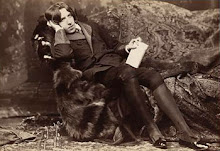
In the photo, he is posing with the traditional Greek male costume of the 19th century, worn in our area back then.
Ο αρχαιολάτρης Όσκαρ Ουάιλντ, που ήξερε να διαβάζει αρχαία ελληνικά στα δώδεκά του χρόνια, κάνει πολλές αναφορές στην ελληνορωμαϊκή αρχαιότητα, π.χ. "Είχε όλη τη λεπτή χάρη μιας μικρής Ταναγραίας, όπως εκείνης που έχεις στο εργαστήρι σου, Μπάζιλ.' Ο Βαγγέλης, ο Έλτον και ο Μουσλούμ έστησαν φωτογράφησαν τη φράση του Όσκαρ Ουάιλντ με το αγαλματάκι της Ταναγραίας στη Βιβλιοθήκη. Ο Σωκράτης έκανε ένα υπερκείμενο με σχετικές εικόνες.
Στη φωτογραφία, ο συγγραφέας ντυμένος τσολιάς, ποζάρει με λεβεντιά που του δίνει η παραδοσιακή μας στολή στο φακό.
Διαβάστε το άρθρο της ΚΑΘΗΜΕΡΙΝΗΣ για την επίσκεψη του Wilde στην Ελλάδα, την άποψή του για την Αθήνα και τον Παρθενώνα, για τα Ελγίνεια (!) εδώ
Wednesday, October 22, 2008
DISCUSSING OSCAR WILDE IN MAGOULA SCHOOL LIBRARY
 We initiated our second book "The Picture of Dorian Gray" in Magoula Junior High School library. Four new bookclub members and one of the old ones visited the neighbouring library and did some research of digital and non-digital sources on Oscar Wilde. The result is a list of questions for our next webcam chat with our twinners in Targoviste. Beauty, art, selfulfilment, society's normes, hedonism, good and evil, we've got some tough ones, for you, girls!
Just name the day...
Many thanks to teacher librarian, mr Manolis Lemontzoglou for his assistance.
TO BRIDGE THE TWO BOOKS: Which person did Oscar Wilde and Bram Stoker have in common? (hint: wife)
Η βιβλιοθήκη του Γυμνασίου Μαγούλας φιλοξένησε την πρώτη συνάντηση της Αναγνωστικής μας Λέσχης, που σήμερα είχε τα νέα μέλη (και ένα παλιότερο). Κάναμε έρευνα πάνω στη ζωή και το έργο του Όσκαρ Ουάιλντ από έντυπες και ψηφιακές πηγές και πολυμέσα της Βιβλιοθήκης, και ετοιμάσαμε λίστα με ερωτήσεις προς συζήτηση στην επόμενη τηλεδιάσκεψη με τις φίλες μας στη Ρουμανία. Όλα τα μεγάλα θέματα θίγονται στο Πορτραίτο του Ντόριαν Γκρέυ. Ανυπομονούμε να τα συζητήσουμε.
Τις ευχαριστίες της ομάδας στον υπεύθυνο κο Μ. Λεμοντζόγλου για την αρωγή του.
Tuesday, September 23, 2008
Talk to me!
 European Day of Languages, 26 September
Celebrating linguistic diversity, multilingualism, lifelong language learning
Dear friends from all over the world, we celebrate on Friday, in the European Union, European Day of Languages. On this occasion, we thought that we can transform the blog into a FORUM, a space for dialogue (not only European but also international), which can establish a bridge between cultures and peoples which, in the traditional way, are in affirmation of permanent competition. You are invited, therefore, to post to the topic below your comments and your views on multiculturalism and multilingualism.
LANGUAGES A
 RE THE LAB OF DREAMS.
Words of wisdom written by Lydia, Maria and Anastasia, 16 during their English class. Many thanks to Ms Dretaki for her help.
In the photo you can see old and new members of our book club who commented on today's post, holding the Library's dictionaries.
Ms Radulescu's invitation set our library on fire today!!
...we don't know which is the angel's language, but today we felt the angels very close to us, because we heard them in so many ways. Thanks again to Helen and Greek team from Elefsina, for the gift they offered us today. A
 great day.
Subscribe to:
Posts (Atom)